Tower Rush Symbols and Paytable
Tower Rush is a fast game from Galaxsys with stacked-floor play, three named bonus floors, and a cashout that pays the stake multiplied by the accumulated multiplier. This page focuses on the symbols and paytable view, so you can read the format, check the mobile setup, and avoid common interpretation errors.
Symbols and Paytable format and core rules

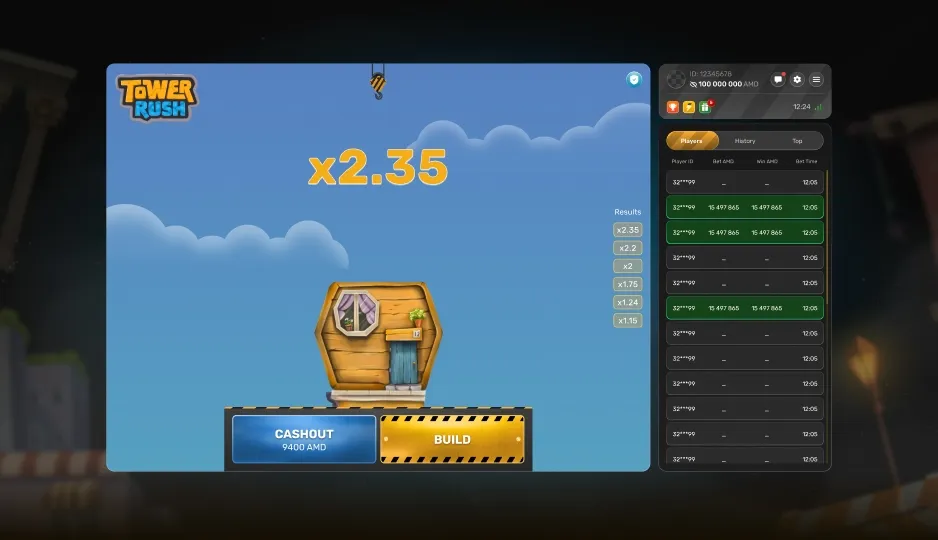
The symbols-and-paytable view for the game is built around floor placement rather than a classic reel layout. Players stack floors while avoiding collapse, and each successful floor adds a multiplier. Those multipliers are multiplied together, so the result is based on the sequence of placed floors, not on a single fixed award.
When you look at the paytable, the main point is to understand what each successful placement contributes and how the final cashout is calculated. A cashout pays the stake multiplied by the accumulated multiplier. That means the stake is the amount you place on the round, while the payout depends on the multiplier that has built up during that round.
| Item | What it means in play |
|---|---|
| Successful floor placement | Adds a multiplier to the round result. |
| Accumulated multiplier | Combines the placed-floor multipliers into the amount used for cashout. |
| Cashout | Pays the stake multiplied by the accumulated multiplier. |
| Collapse | Ends the stacking sequence if a floor is not kept in play. |
The bonus-floor names are part of the format as well. Frozen Floor, Temple Floor, and Triple Build are the three named bonus floors, so they are the labels to watch for when reading the game’s special elements. The page does not add extra symbol meanings beyond those names, so treat them as the official terms you should recognise first.
Symbols and Paytable risk, pace, and session planning
The game belongs to the Fast / Turbo Games category, so the play style is quick rather than slow and deliberate. That pace matters when reading the paytable because the sequence of floor placements can move quickly, and the total multiplier changes with every successful step. If you want to follow the round carefully, keep your attention on the multiplier build-up rather than on unrelated screen details.
Session planning starts with the stake, not with the payout. Since the cashout is stake multiplied by the accumulated multiplier, the amount you choose at the start frames the entire round. A larger stake changes the size of the eventual payout calculation, while the multiplier is what the play sequence adds on top.
RTP is listed at 96.2%–97.6%. RTP means return to player, a long-run average measure, not a promise for any single session or a guaranteed result on one round. Use it as a reference point only. It does not tell you which individual stack will succeed or how far a particular round will go.
The table below separates the round elements from the money terms so the paytable is easier to read in practice.
| Term | Practical reading tip |
|---|---|
| Stake | Check this first because it is the amount used in the final payout calculation. |
| Multiplier | Watch how each successful floor changes the round value. |
| RTP | Use it as a general statistical reference, not as a session promise. |
| Cashout | Read it as stake multiplied by the accumulated multiplier. |
How Symbols and Paytable works on mobile
Mobile demo access is available, so you can study the symbol and paytable layout on a phone or tablet without changing the basic game structure. The mobile demo is useful when you want to inspect the floor names, the current multiplier, and the final payout wording on a smaller screen before you use the app version.
The app is also available, and that matters for readers who prefer a full-screen layout. On mobile, the main task is still the same: track the stacking sequence, notice which bonus-floor names appear, and read the multiplier build-up before any cashout choice. The layout may feel smaller, but the logic of the paytable does not change.
If you are checking the page on a phone, use one habit consistently: read the current stake and accumulated multiplier together. That simple check helps you separate the amount you place from the amount the round may return. It also makes it easier to see whether a quick round is still in progress or whether the cashout point has already been reached.
On mobile, the demo is the best place to learn the screen labels without pressure. Because the game is in the fast category, a short look at the symbol names and multiplier area is often enough to understand where the round stands. If you switch to the app, use the same reading pattern so the interface feels familiar.
Symbols and Paytable bonus and balance checks
The bonus-floor labels are Frozen Floor, Temple Floor, and Triple Build. These names are useful because they tell you which special floor type is in play, even when the round is moving quickly. The page does not assign extra effects beyond those names, so the safe approach is to treat them as distinct labels in the symbol set.
When you check your balance, keep the difference between stake and payout clear. The stake is what you commit to the round. The payout is the stake multiplied by the accumulated multiplier if you cash out under the displayed rules. That distinction matters because a balance check is about the amount you have available, while a cashout readout is about the current round result.
The game’s release date is 2024-02-28. That detail is useful when you are sorting the title among newer releases from the same provider. It does not change how the symbols work, but it does help you identify the version you are reading if several Galaxsys titles sit side by side in a catalogue.
For a quick practical check, compare the bonus-floor name, the current multiplier, and the stake before you make any round decision. Those are the three values that give you the clearest read on what the paytable is showing at that moment.
Common Symbols and Paytable mistakes
The first common mistake is treating the RTP like a promise for the next round. It is not a guaranteed return. It is a long-run measure, so it should not be read as a forecast for a specific stack or a specific cashout point.
The second mistake is mixing up the stake with the cashout. The stake is the amount you place at the start, while the cashout is the stake multiplied by the accumulated multiplier. If you blur those two ideas, the paytable can look more confusing than it is.
The third mistake is assuming the bonus-floor names are interchangeable. Frozen Floor, Temple Floor, and Triple Build are separate labels, so keep them distinct when you read the screen. If you are using the mobile demo, take a moment to match each name to the exact on-screen wording before moving into the app.
The fourth mistake is reading the fast pace too loosely. Because the game is a Turbo title, the round can move quickly. That makes it more important to check the multiplier area before you act, rather than after the sequence has already changed.
A final practical habit is to use the demo first if you want to learn the symbol labels without pressure. The demo and mobile demo are both available, so you can practise reading the same paytable logic on a smaller screen and then move to the app with the terminology already clear.
What does each successful floor do?
Each successfully placed floor contributes a multiplier. Those multipliers are multiplied together, so the round value grows from the sequence of successful placements rather than from a single fixed symbol award.
How is the final payout calculated?
The cashout pays the stake multiplied by the accumulated multiplier. That means the amount you choose at the start is one part of the result, and the multiplier built during the round is the other part.
What are the bonus floors called?
The named bonus floors are Frozen Floor, Temple Floor, and Triple Build. Use those exact labels when you read the symbol area so you can tell the special floors apart from the normal stacking sequence.
Is the mobile version different from the main game?
The core rules stay the same, and mobile demo access is available. The app is also available, so you can study the same paytable logic on a phone or tablet and then use the app if you prefer that format.
What should I check before I read the paytable?
Check the stake first, then the current multiplier and any bonus-floor name on screen. Those three items give you the clearest practical read on the round without confusing the stake with the payout or the RTP.
Mostbet is the named casino confirmed for Pakistan in the available casino data.
Ready to Play Tower Rush?
Try the demo or play at Mostbet Pakistan with local payment methods.